Process Art vs Product Art: What Develops Your Child

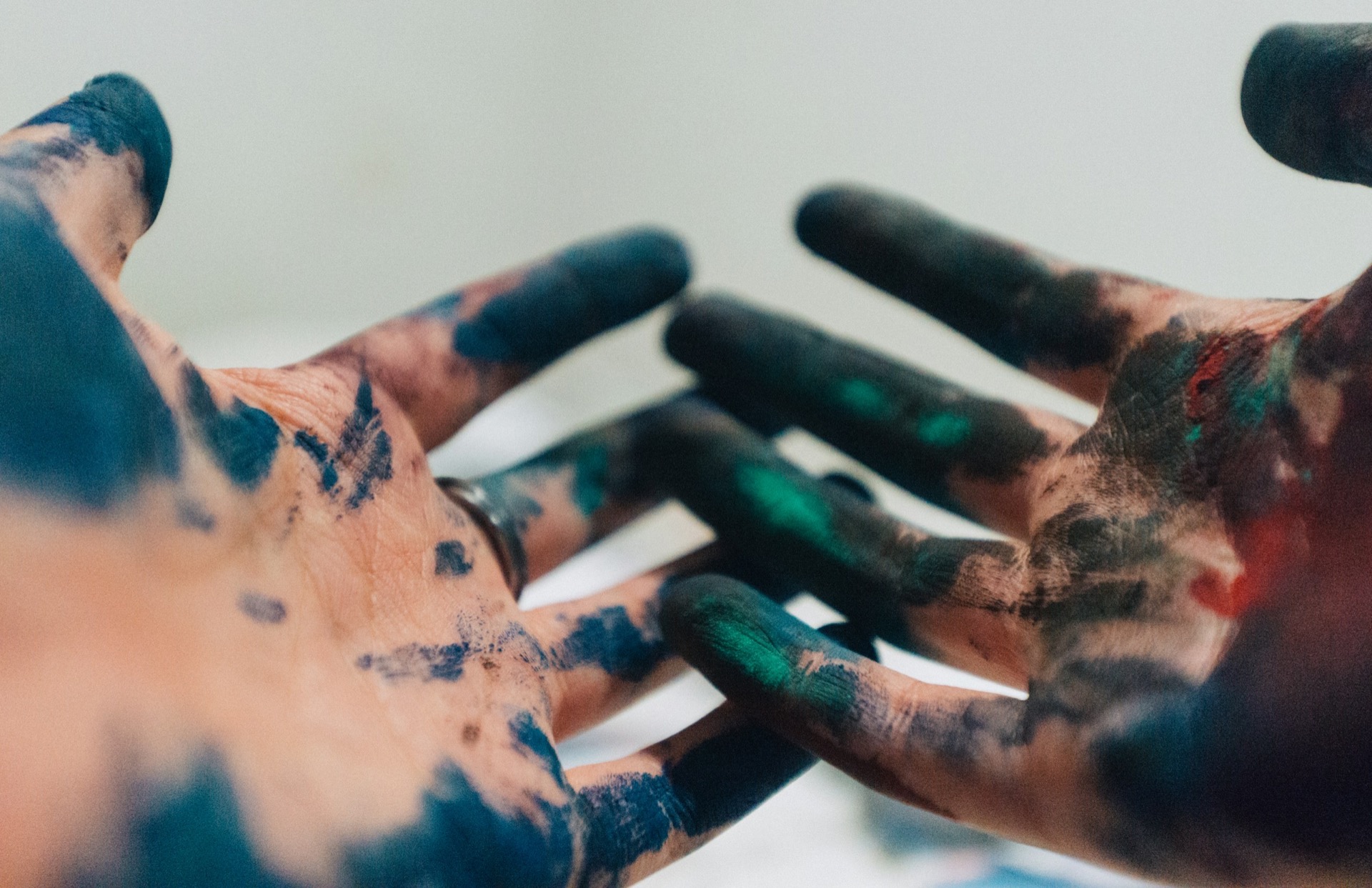
The parenting forums frame this as a moral argument. Process art is presented as developmentally enlightened. Product art — the kind with a finished craft everyone takes home from school — is treated as conformist and creativity-stifling. The implication is that good parents lean process; product art is what bad preschool teachers do.
This post is not that argument. Based on developmental research and the practitioner consensus from early childhood education, both approaches have legitimate developmental value, and the real question is never “which is better” but “which serves this child’s development at this stage.”
What the terms actually mean
Process art means the child chooses materials and methods freely, with no predetermined outcome. The point is exploration — what does this paint do when you use your fingers? what happens if you layer these two colors? — not a finished object. Developmental research, including guidance from organizations like Children’s Lighthouse, shows this aligns closely with how young children’s brains develop: by supporting self-direction, intrinsic motivation, and sensory exploration — the same territory our sensory play guide covers in more depth.
Product art means there is a target outcome. The child follows steps to produce something specific: a paper-plate turkey, a cotton-ball snowman, a color-by-number page. It is directive and instruction-based. Practitioners at Pre-K Pages and similar early childhood educator communities note that product art teaches instruction-following, goal visualization, and procedural thinking — skills with real developmental value, especially for children ages 5 and up.
The field consensus (documented across U-Gro, Pre-K Pages, Children’s Lighthouse, and other practitioner sources) is that framing this as either/or misses the developmental point. The more useful question is: which mode does what, and when does each serve your child?
The developmental breakdown
Ages 2–4: process art is primary
At this stage, children are not yet developmentally ready to hold a product goal in mind while executing multi-step instructions. Their cognitive resources are absorbed by the sensory and motor experience itself — handling the paint, tearing the paper, squishing the clay. The finished object is not meaningful to them in the way it becomes later; the act is the point.
For these ages, a well-designed process art setup does not require buying anything special. Per practitioner guidance, the essential setup includes paint in several colors, varied paper types, foam and standard brushes, glue, and low accessible shelving so children select independently. These materials can be sourced from Dollar Tree and Walmart back-to-school sales without significant cost.
The key design principle is self-initiation: the materials should be accessible without asking, the space should be covered (not pristine), and the adult’s role is to witness, not direct. “Tell me about what you made” beats “what is it supposed to be” every time at this age.
Ages 5–7: introduce product art alongside process
Once children can follow two-to-three step instructions reliably and begin to care about the outcome — once they are frustrated when their drawing “doesn’t look right” — product art starts delivering real value. The ability to hold a goal in mind, break it into steps, execute each step, and arrive at the intended result is a form of executive function development.
This does not mean abandoning process art. It means adding product art as a complementary mode. A week might include one session of free painting (process) and one session of a directed project (product). Both deliver development.
Ages 8–10: both modes continue with shifting balance
By this age, most children have developed enough to choose their own mode based on goal and mood. A child who wants to make a specific thing — a bookmark, a birthday card, a model of something they are interested in — is asking for a product art experience. A child who just wants to paint or build without a specific outcome is asking for process art. Following their lead rather than imposing a mode is the developmentally appropriate choice at this stage.
The comparison you actually need
| Process art | Product art | |
|---|---|---|
| Primary age fit | 2–5 years (dominant mode) | 5–10 years (grows as executive function develops) |
| Core developmental benefit | Self-direction, intrinsic motivation, sensory exploration | Instruction-following, goal visualization, procedural thinking |
| Adult role | Observer/witness — resist directing | Guide — demonstrate steps, check in on progress |
| Materials setup | Open bins, accessible shelves, multiple choices available | Pre-measured or pre-cut materials; step-by-step instructions provided |
| Outcome | Variable — entirely child-determined | Predetermined — defined success state exists |
| Mistake handling | No mistakes by definition — exploration is the goal | Requires resiliency when result differs from the model |
| Best context | Open play time, sensory exploration sessions, daily art corner access | School projects, gift-making, learning a specific technique |
| Typical supply cost | Low — tempera paint, paper, glue; <$30 sourced from discount retailers | Varies by project — bounded by the specific kit or template |
The supply reality
Process art requires fewer specialized supplies than most parents assume. The essentials: non-toxic paint (tempera is the standard), three or four types of paper (printer paper, cardstock, newspaper, construction paper), a few brush types, white glue, and a covered surface. A reusable supply kit for process art can cost under $30 sourced from discount retailers.
Product art typically requires more specific materials — pre-made templates, specific craft items for the project — but the cost is bounded by the specific project. The arts and crafts market is large (valued at approximately $56 billion globally as of 2026 — verify current figures at industry research providers) in part because product-style kits are a high-purchase-frequency item. The honest guidance: for product art at home, choose kits that use materials your child is learning to handle (scissors, glue, paint) rather than novelty materials they will encounter once.
What to say during process art
One practical difference that matters: the language adults use during each mode.
During process art, the most developmentally supportive language is observational and open:
- “I see you used a lot of blue.”
- “How did you make that part?”
- “Tell me about what you made.”
The single most common mistake during process art is “What is it?” — which implies there should be a recognizable subject, which implies judgment, which changes the internal experience from exploration to performance.
During product art, direction is appropriate and expected. The child is learning to follow steps toward a goal. Clear instruction, encouragement when steps get difficult, and acknowledgment when the result matches the goal are all developmentally useful.
What works
- Process art builds self-direction and intrinsic motivation from ages 2–4
- Product art develops executive function and procedural thinking from ages 5+
- Both modes are compatible — alternating them serves broader development
- Process art requires minimal supplies and no prep for the adult
- Product art produces shareable, gifable outcomes that build pride
What doesn't
- Process art setups require mess tolerance and a covered work surface
- Product art can create "right/wrong" anxiety if the child cannot match the model
- Over-directing process art sessions eliminates the developmental benefit
- Product-only art environments underserve children under 5 developmentally
Common questions
My preschool only does product art crafts. Should I be concerned?
Practitioner guidance suggests a balanced approach is ideal, but a high-quality product art experience (one that allows some choice within the project, does not penalize children whose outcome differs from the model, and uses real materials rather than highly constrained templates) is developmentally reasonable. Supplement with process art time at home if it matters to you.
How do I set up a process art space at home without ruining my floors?
A vinyl tablecloth under the work area, a smock for the child, and a bucket of soapy water nearby solve most of the mess. The essential shift is framing: the mess is the process working correctly, not a failure of setup. Outdoor process art during warmer months eliminates most indoor mess concerns entirely.
My child only wants to make things that look "right" — is that a problem?
Perfectionism in art is common from ages 6–8 as children's self-evaluation ability develops faster than their motor skills. This is a normal developmental phase, not a sign that something is wrong. Approaches that help: choosing open-ended materials where there is no 'right' outcome (collage, clay), framing mistakes as design decisions, and reducing comparisons with others' work.
At what age can children do product art independently?
Most children can follow simple 3-step product art instructions independently by age 6–7, depending on the complexity of the project. For activities involving scissors, glue guns, paint, or small parts, appropriate supervision remains important regardless of age. Age ranges on kits are a starting baseline, not a guarantee.
Are craft kits process art or product art?
Nearly all commercial craft kits are product art — they have a defined outcome and step-by-step instructions. Some kits (open-ended supply sets, assorted materials without a specific project) lean process. The distinction matters less than asking: does this specific activity give my child agency over choices and materials, or is it primarily about following steps toward a predetermined result?
The practical takeaway
The developmental literature does not declare a winner. Early childhood educator communities — U-Gro, Pre-K Pages, Children’s Lighthouse — all land in the same place: both modes have value, both have appropriate ages, and framing it as a moral contest misses what children actually need.
The most useful implementation for most families: keep process art materials accessible (low shelf, covered surface) for self-initiated exploration, and plan occasional product art sessions when a specific technique or project is the goal. Neither mode needs to displace the other.
For more ideas on setting up a practical home art corner that supports both, browse our Crafts & Art category.
Heads up: this post contains affiliate links. If you buy through them we may earn a commission at no extra cost to you — it's how we fund independent research. Full disclosure.